EN

A practical B2B guide to specifying three-strand multifilament twisted rope by material, yarn type, diameter, strength basis, end finish and packaging.
Three-strand twisted rope remains one of the most practical rope constructions for commercial buyers. It is easy to recognize, straightforward to handle, available across common synthetic materials, and suitable for a broad range of marine, agriculture, construction, utility and general-purpose applications.
For a buyer, however, “three-strand rope” is not a complete specification. A 10 mm PP multifilament rope and a 10 mm nylon three-strand rope may look similar in a catalogue, yet they differ in feel, stretch, water behaviour, cost profile and best-fit application. The right purchase decision starts with construction, then connects material, diameter, strength requirement, finish and packing to the job the rope must do.
This guide explains how to specify and source three-strand multifilament twisted rope without treating a generic breaking-strength number as the whole story.
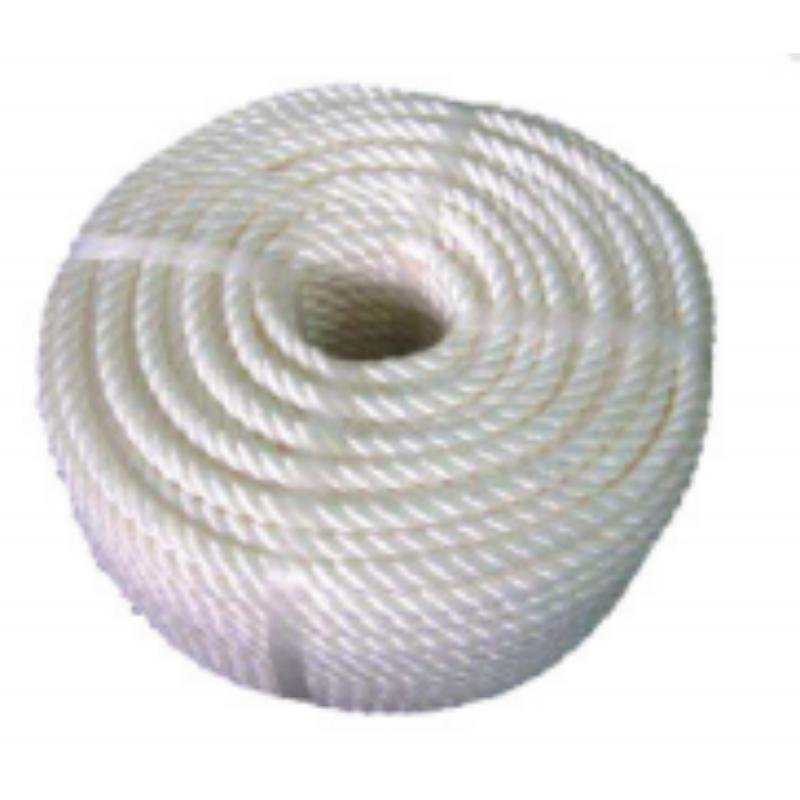
Three-strand twisted rope is made by twisting three larger yarn bundles—often called strands—together around a common axis. Each strand is first built from many smaller yarns or filaments. The three finished strands are then twisted in the opposite direction to create a balanced rope construction.
This construction is widely used because it offers a useful balance of handling, strength, flexibility and cost. The rope can be coiled, cut, spliced and inspected without specialized equipment. Its helical surface also makes the structure visually clear: a buyer can quickly see whether the rope is a three-strand construction and whether the twist appears even.
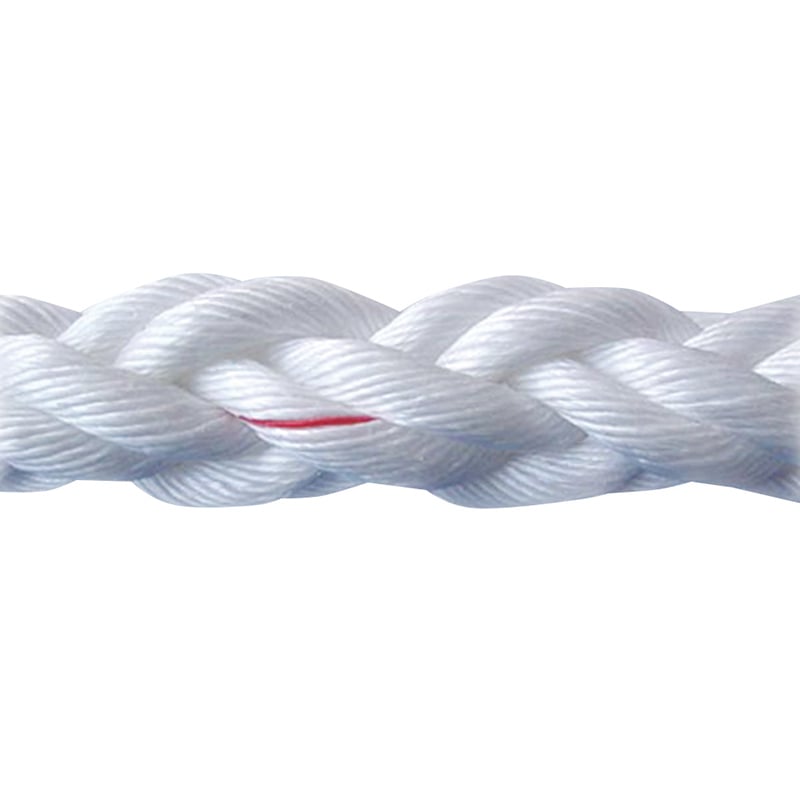
Three-strand construction is different from braided rope. Braided rope interlaces yarns or strands in a woven pattern; three-strand rope relies on twist. Neither construction is automatically better. The application, material, abrasion conditions, expected elongation and end-use handling should decide.
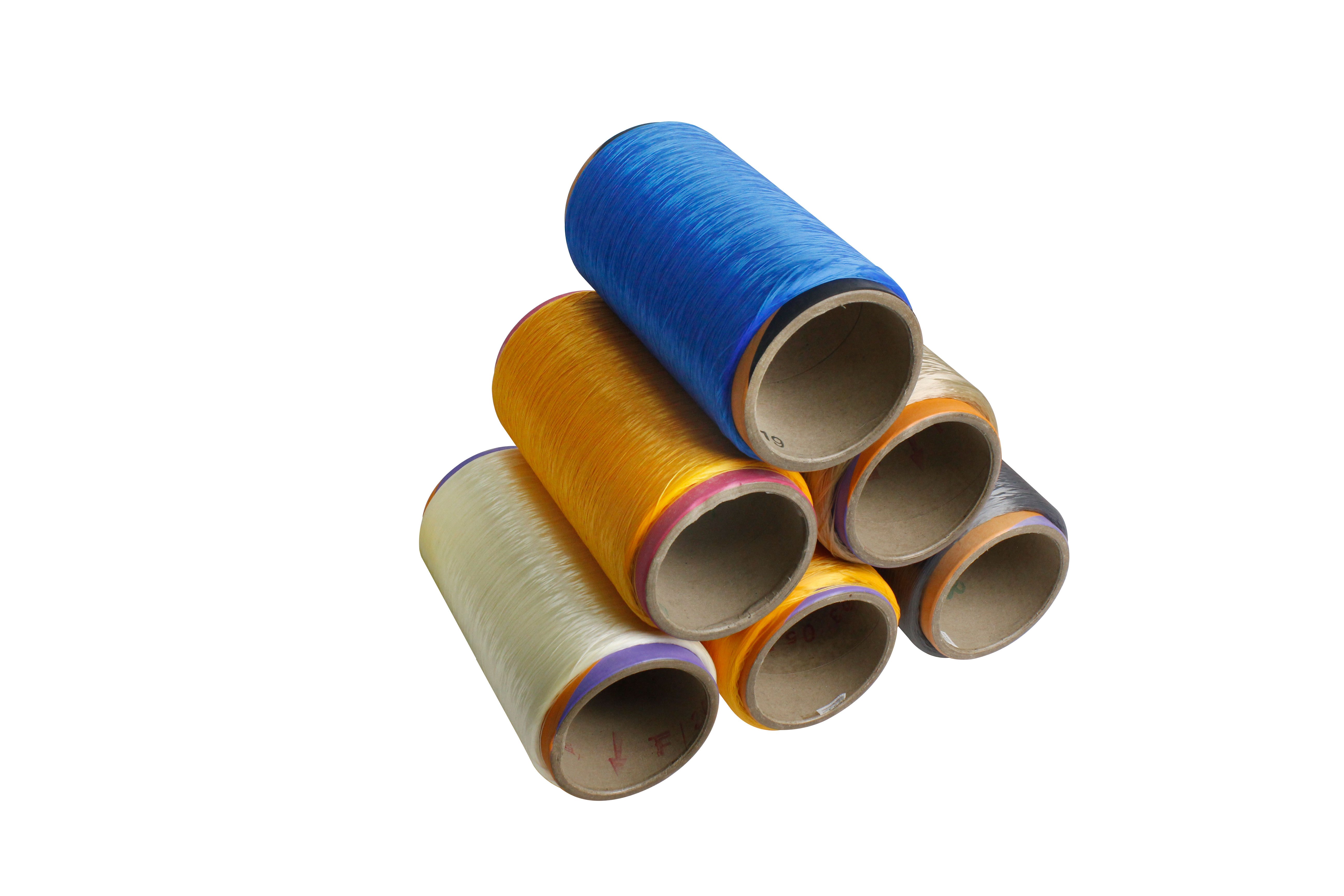
“Multifilament” describes the yarn inside the rope, not only the final three-strand layout. A multifilament yarn is made of many fine continuous filaments bundled together. Compared with coarse monofilament or split-film constructions, it usually gives a softer hand, more even surface and more flexible feel.
For distributors and private-label brands, that can matter as much as headline tensile data. A softer, more flexible rope is easier for customers to coil and knot. In marine and utility ranges, it can also support a more premium product position. The trade-off is that the buyer still needs to match the polymer and construction to the intended environment; “multifilament” alone does not establish abrasion resistance, UV performance or a safe working limit.
When asking for a quote, specify both levels:
That distinction prevents suppliers from quoting visually similar but commercially different rope constructions.
The material is normally the next major decision after construction. The table below is a sourcing guide, not a substitute for a product-specific data sheet or sample test.
| Material | Typical buyer reasons to consider it | Questions to settle before ordering |
|---|---|---|
| Polypropylene (PP) multifilament | Lightweight, economical and commonly selected for general utility, agriculture and water-related use. | Does the application need a particular UV package, colour, buoyancy behaviour or softness? |
| Polyethylene (PE) | Often chosen where buyers want a practical, economical synthetic rope for outdoor and marine-adjacent use. | Is a monofilament, multifilament or split-film construction intended? What abrasion exposure is expected? |
| Nylon (polyamide) | Often considered where energy absorption and a softer, more elastic handling profile are valuable. | How much stretch is acceptable? Will the rope be frequently wet or used around shock loading? |
| Polyester | Often specified for applications where lower stretch and weathering performance are more important than buoyancy. | Does the use case demand low elongation, colour retention or a particular marine or industrial finish? |
Do not choose material from a generic “best rope” list. Start with the application. A mooring, general-purpose farm rope, cargo-control line, decorative utility rope and water-rescue product can all have different priorities even when each uses a three-strand construction.
A sourcing request becomes much more actionable when it contains the same fields a factory needs to plan production and testing.
| Specification field | Why it matters | Example of a useful buyer instruction |
|---|---|---|
| Material and yarn type | Sets the basic performance and hand feel. | “PP multifilament, UV-stabilized” |
| Construction | Avoids construction substitution. | “Three-strand twisted, balanced lay” |
| Diameter | Affects handling, weight and strength. | “8 mm nominal diameter; state tolerance” |
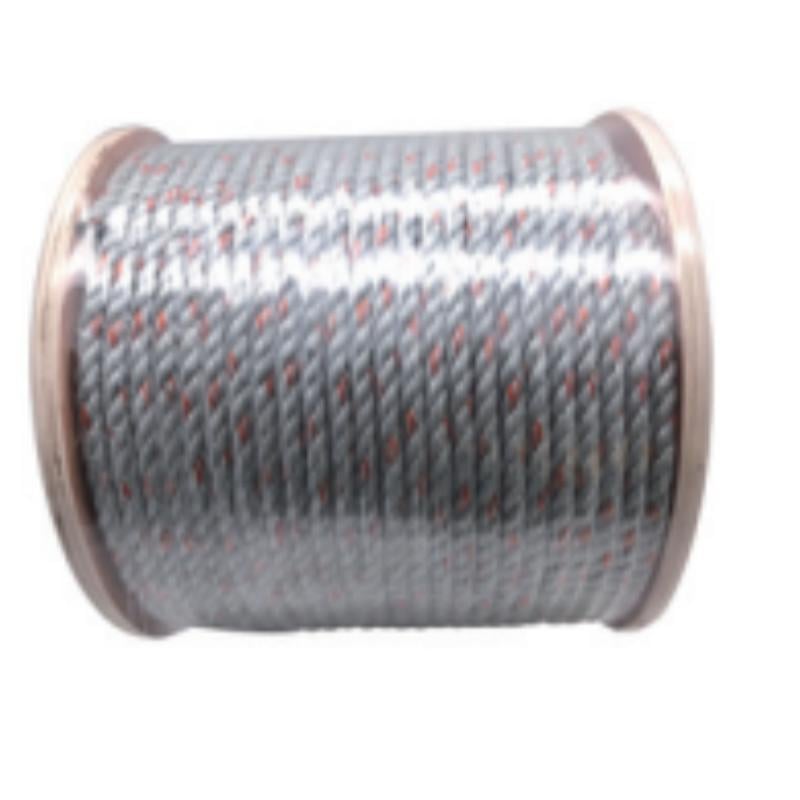
| Coil or reel length | Determines packing and retail readiness. | “30 m coil with hang tag” |
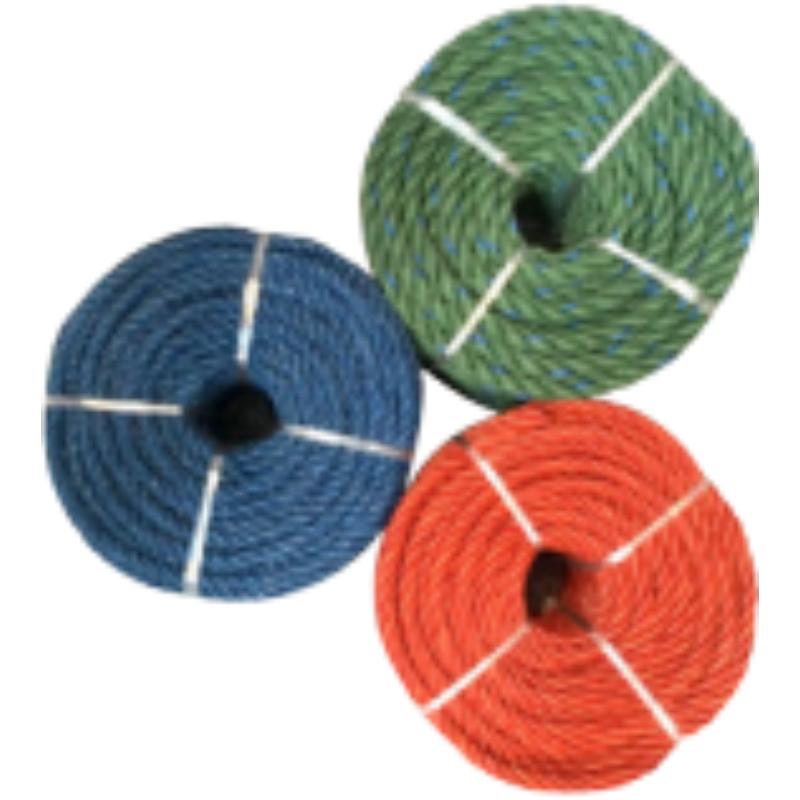
| Colour | Can be functional or brand-led. | “Blue with white tracer” |
| Strength basis | Makes quotations comparable. | “Provide new-rope minimum breaking strength and test method” |
| End finish | Avoids loose ends and repacking work. | “Heat-sealed ends” or “eye splice at one end” |
| Packaging | Controls damage, barcode readiness and carton efficiency. | “Shrink-wrapped coils, private-label sleeve, master-carton mark” |
One of the most common procurement mistakes is to treat breaking strength as a permitted service load. Minimum breaking strength is a laboratory property for new, unused rope under defined conditions. Working load and working-load limit depend on the application and a design factor, plus conditions such as knots, splices, abrasion, heat, chemical exposure, age, dynamic loading and inspection practice.
Diameter should be chosen from the load case and handling need, then verified against the supplier’s tested specification for that exact material and construction. A nominal diameter alone is not enough to compare suppliers: yarn type, twist, density, finish and test method can all affect the resulting performance.
For resale, coil length can be just as important as diameter. Hardware retailers may require shelf-ready coils with labels and barcodes. Marine distributors may prefer larger coils or reels to reduce handling. Industrial buyers may need custom cut lengths, spliced eyes or bulk coils for conversion. Request the following before approving a production order:
Three-strand multifilament rope can suit general utility, agriculture, fishing, marine support, mooring-related work, construction handling and retail rope lines. Its suitability is always application-specific.
For general utility and agriculture, buyers usually prioritize economical material, easy handling, UV stabilization and practical coil sizes. For marine and dockside use, water exposure, abrasion points, elongation behaviour, chafe protection and appropriate end termination deserve closer attention. For industrial tie-down or positioning, clarify whether low stretch, repeat handling or a particular end fitting is required.
For lifting, personnel support, fall protection, towing under shock load, rescue and other high-consequence uses, do not rely on a general article or a catalogue image. Confirm applicable regulations, the manufacturer’s product-specific rating, required certification and the complete system design with a qualified person.
A practical pre-shipment inspection does not need to be complicated. It does need to be agreed before production begins.
Use these questions when comparing quotes:
Answers to these questions turn an informal rope enquiry into a comparable RFQ. They also give the buyer a much better basis for deciding whether a factory is quoting the same product requested—or merely a nearby substitute.
The lowest price per coil is not necessarily the lowest landed cost or the best product match. Three-strand rope quotations become misleading when the material, yarn construction, length, packing or reported strength basis is left open. A buyer should normalize every quotation before comparing unit price.
Start by placing each supplier’s offer on one sheet with the same fields: polymer, yarn type, construction, nominal diameter, coil length, actual net weight, end finish, individual packing, carton quantity, declared minimum breaking strength, production sample status, MOQ, Incoterm and lead-time assumption. If any field is blank, treat the price as provisional rather than comparable.
| Comparison point | What to check | Why it prevents a bad comparison |
|---|---|---|
| Yarn type | Confirm multifilament rather than assuming it from an image. | A different yarn construction can change feel, appearance and cost. |
| Strength statement | Ask whether it is minimum or average, and what product it applies to. | A single unqualified number cannot establish equivalent performance. |
| Length and weight | Confirm both where relevant. | A coil sold by nominal length may not be comparable to one sold by mass. |
| Packaging | Compare labels, sleeves, reels, cartons and pallet protection. | Retail-ready packing creates cost but reduces repacking work and damage. |
| Custom details | Record tracer, colour, splice and finish requirements. | Small custom changes can affect MOQ and production schedule. |
For a first order, approve the physical sample and printed packaging before approving the full run. For a repeat order, keep the approved sample, purchase-order specification and inspection record together. That gives both the buyer and factory a practical reference if a later order needs to match a previous product line.
Not as a universal rule. Strength depends on the material, diameter, yarn construction, rope design and test method. Three-strand and braided ropes should be compared only using product-specific specifications for the intended application.
There is no single best material. PP multifilament is often attractive for practical, lightweight commercial rope; nylon is often selected where elongation and energy absorption matter; polyester is commonly considered for lower-stretch applications. Confirm the actual use conditions before choosing.
It can, but a knot can change rope performance and should not be assumed to preserve published strength. For critical applications, use an engineered termination or splicing method that is appropriate for the rope and load case.
Send material, yarn type, three-strand construction, diameter, coil length, colour, end finish, target application, packaging, annual volume and destination market. If strength is critical, state the required performance basis rather than only asking for “high strength.”
RIOOP supplies twisted-rope options for commercial buyers who need a specification that works beyond a catalogue photo. Share your material, diameter, length, colour, end finish, packing and expected volume requirements. We can help you align the construction and packaging with the target application, then confirm product-specific details through a sample and quotation.
Explore RIOOP Twisted RopeTechnical reference: Cordage Institute CI 1401-19: Recommended Safety Practices for Use of Fiber Rope. Confirm final product availability and product-specific specifications at enquiry.
 Hot News
2026-10-15
2026-10-01
2026-09-16
2026-09-01
2026-08-07
2026-07-23